


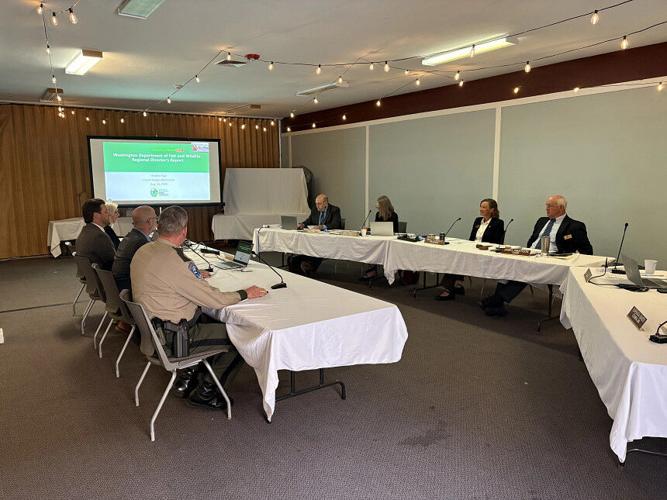
LONG BEACH, Wash. — The Washington Fish and Wildlife Commission heard public input and discussed a variety of conservation issues during its Aug. 13 to 15 hybrid meeting in Long Beach in Pacific County.
The Commission heard briefings including Washington Department of Fish and Wildlife (WDFW) Director Kelly Susewind’s monthly report and an update from the regional director; made decisions on the agency’s 2027-2029 budget requests for the 2027 state legislative session, two land transactions, and streaked horned lark periodic status review; and received a briefing on options for a public workshops facilitator.
The Commission meeting began Thursday, Aug. 13 with Habitat, Fish, and Wildlife committee meetings. The committees heard updates on alternative energy siting, permitting, and guidance; invasive northern pike management; estimating recreational fishery harvest using electronic catch record cards; proposed recreational scallop harvester rules; Puget Sound Dungeness crab non-reporting penalties; state rules for threatened and endangered species; and state rules on lethal removal of gray wolves that attack domestic animals.
People are also reading…
On Friday, Aug. 14, the full Commission convened and delegated the director to begin rule making on increasing the penalty for not reporting recreational catch of Dungeness crab in Puget Sound following a report from the Fish Committee.
The Commission then heard open public input followed by reports from WDFW Director Kelly Susewind and WDFW Coastal Region Director Heather Hall.
On Friday afternoon, the Commission approved the agency’s 2027-2029 budget requests for the 2027 state legislative session.
The Commission then approved land transactions in Pacific and Douglas counties that are additions to the Johns River Wildlife Area and the Big Bend Wildlife Area.
Next, the Commission decided on the Periodic Status Review for the streaked horned lark, opting to maintain its state endangered status. At the end of the day, the Commission received a briefing and discussed the scope of work for potentially hiring a public workshops facilitator focused on public engagement.
The Commission meeting continued Saturday, Aug. 15, with an open public input opportunity and concluded with meeting debrief, future meeting planning, and an executive session.
Presentation slides and materials are posted on the Commission agenda. The August hybrid meeting was recorded so members of the public can watch at their convenience. The recording, as well as information about past and future Commission meetings and ways to participate, can be found at WDFW's Commission meetings webpage.
The Washington Fish and Wildlife Commission is a panel appointed by the governor that sets policy for WDFW. WDFW works to preserve, protect and perpetuate fish, wildlife, and ecosystems while providing sustainable fish and wildlife recreational and commercial opportunities.


