



Portions of Hood Canal and Admiralty Inlet remain closed due to biotoxin risks.
OLYMPIA – Following an unprecedented summer-long biotoxin closure of recreational shellfish gathering on public beaches throughout Hood Canal and portions of Admiralty Inlet, Washington Department of Fish and Wildlife (WDFW) is reopening harvest of clams, mussels, and oysters on several beaches after the Washington State Department of Health (DOH) lifted biotoxin closures in certain areas.
WDFW has issued an emergency fishing rule reopening clams, mussels, and oysters at public shellfish beaches in Dabob and Quilcene bays in Jefferson County (butter and varnish clams remain closed by DOH while all other species are open) and at Belfair State Park in Mason County (all species of clams, mussels, and oysters are open) following updated biotoxin guidance for these areas from DOH. WDFW is also extending the oyster-only season at Point Whitney Tidelands and Lagoon in Jefferson County.
People are also reading…
The fishing rule maintains ongoing recreational clam, mussel, and oyster closures on public beaches in other portions of Marine Area 12 (Hood Canal) as well as in Marine Area 9 (Admiralty Inlet) south of a line drawn from Foulweather Bluff in Kitsap County to Olele Point in Jefferson County due to DOH testing indicating continued high biotoxins levels.
Shellfish gatherers should always check the DOH’s Washington Shellfish Safety Map before harvesting shellfish and the WDFW beach webpage for the beach you are visiting to confirm seasons are open, as biotoxin risks can change quickly.
From June 12 until Sept. 3, all of Hood Canal and portions of Admiralty Inlet were closed by WDFW and DOH for recreational harvest of clams, mussels, oysters, and other mollusks due to extremely unsafe biotoxin levels, including the risk of Paralytic Shellfish Poisoning (PSP). Marine biotoxins are poisons produced by naturally occurring algae blooms.
“The biotoxin levels we saw this summer developed quickly and intensely, persisting for months in ways not previously observed in Hood Canal,” said Chris Eardley, WDFW’s Puget Sound shellfish policy coordinator.
“Extensive coordination with DOH, local monitoring partners, and a substantial effort by WDFW staff to increase sampling throughout Hood Canal has allowed us to reopen shellfish harvesting on several beaches,” said Eardley. “We’re also happy to be able to extend oyster seasons on some beaches to offset lost opportunity over the summer.”
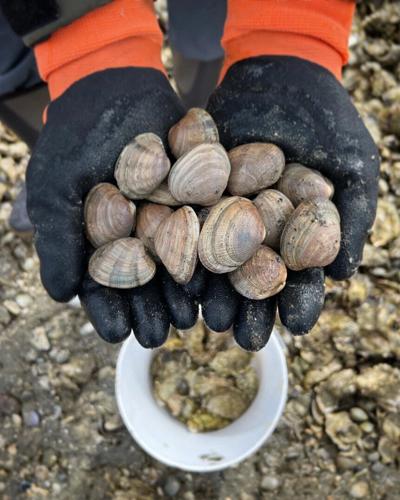
The DOH harvest closure for butter clams and varnish clams remains in effect for areas that are open to shellfish harvest in Dabob and Quilcene bays. A bivalve shellfish identification guide (PDF) is available online from DOH and WDFW.
Oyster seasons have been extended at the Point Whitney Tidelands and Lagoon through Sept. 30 to offset lost opportunity there; these beaches remain closed to clam harvest to allow recovery of clam populations. Other Hood Canal beaches may see season extensions when biotoxin status allows for reopening.
All other shellfish seasons, daily limits, minimum sizes, and rules including the requirement to refill dig holes remain in place. More information is available in the Washington Sport Fishing Rules and on WDFW’s recreational clam, mussel, and oyster harvest webpage.
A valid shellfish/seaweed or combination fishing license is required on public shellfishing beaches. Licenses are available online including in the MyWDFW mobile app, at license dealers statewide, and WDFW regional offices.
“What occurred in Hood Canal this summer was alarming and unfortunate, with significant harvesting opportunity lost in peak season in one of Washington’s best areas for shellfish,” says Eardley. “WDFW and DOH coordinated to confront potentially lethal levels of biotoxins in shellfish to prevent serious illness among our harvesting public. We’re grateful to the hard work of our colleagues at DOH, to the many monitoring partners and tribes, and to the public, who has been understanding and cooperative in the interest of safety.”
The Washington Department of Fish and Wildlife works to preserve, protect, and perpetuate fish, wildlife and ecosystems while providing sustainable fish and wildlife recreational and commercial opportunities.


